For an overseas buyer, inspection is the point where an order becomes a specific vehicle. A quotation may describe a model and trim, but the inspection should connect that description to one VIN, one physical car and one documented condition before shipment.
The aim is not to create a glossy photo set. It is to find mismatches early, record the vehicle honestly and agree how any issue will be handled before the car enters the port or container.
1. Confirm the identity and the order
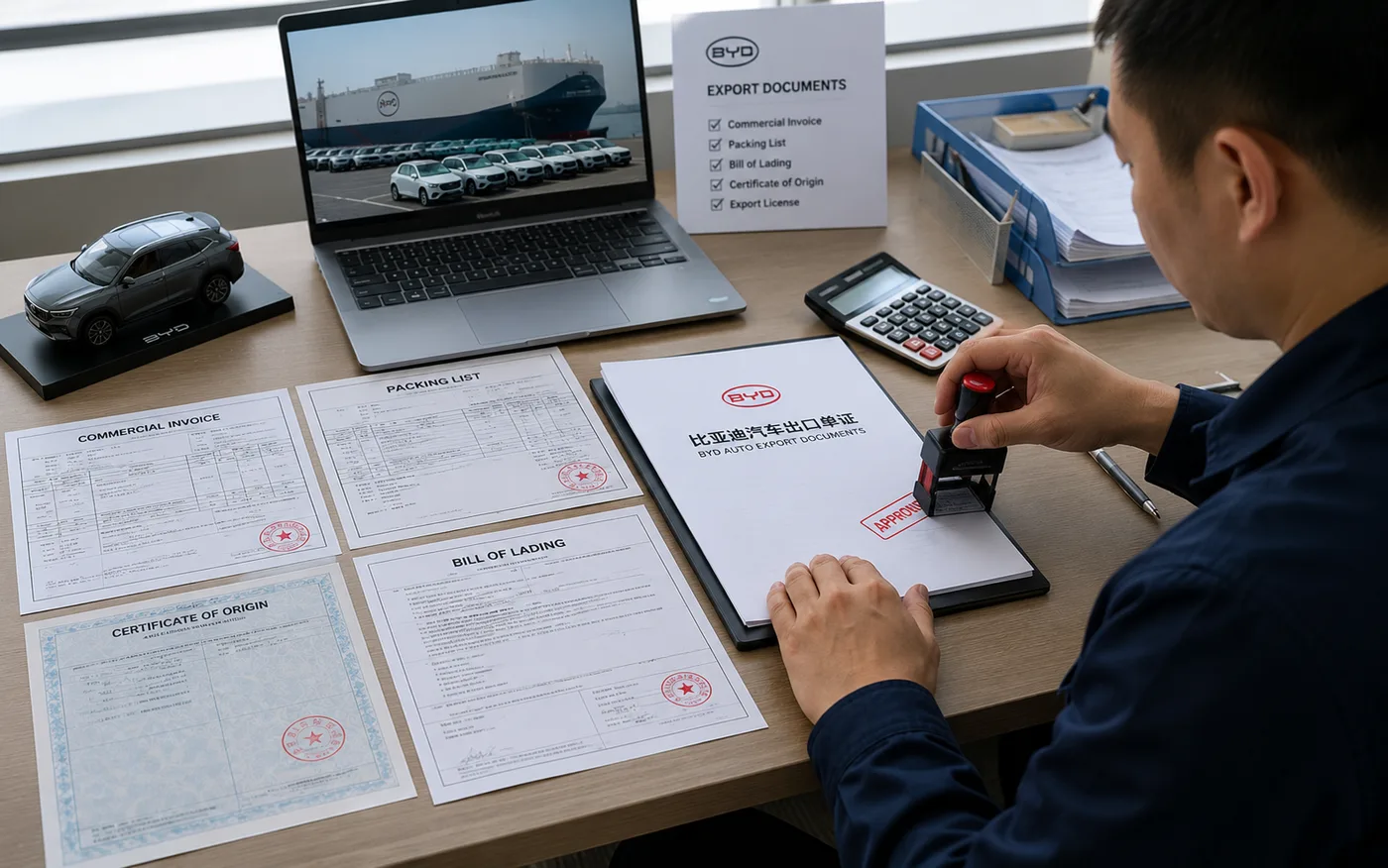
- VIN on the vehicle matches the invoice and export documents
- Make, model, trim, model year and powertrain match the confirmed order
- Factory left-hand-drive or right-hand-drive configuration is correct
- Exterior colour, interior colour, wheel design and major options match
- Production information and odometer reading are recorded
- Keys, charging cable, manuals and agreed accessories are present
2. Check condition from the outside in
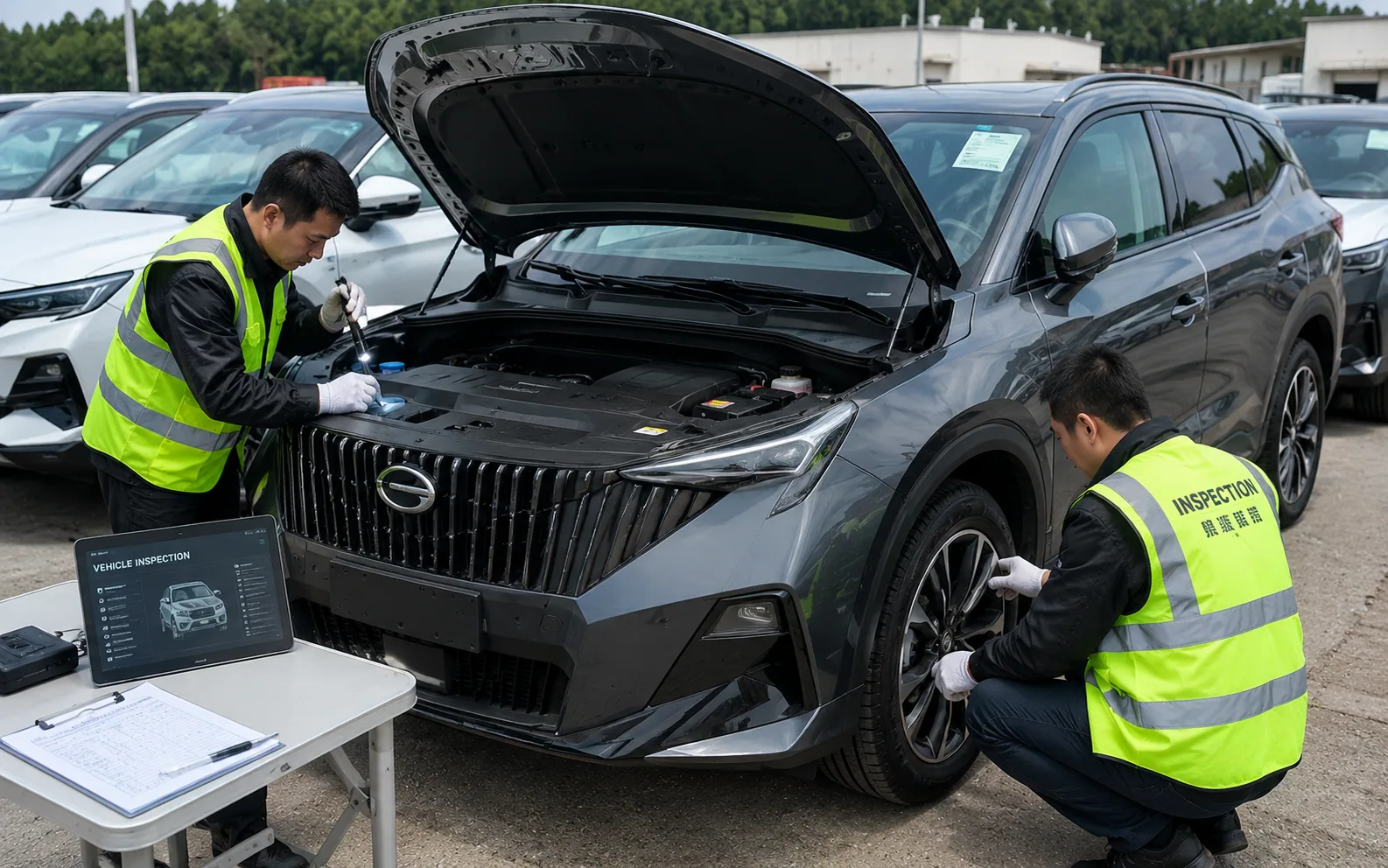
A walk-around should cover paint, panel gaps, glass, lamps, wheels and tyres. The inspector should then check the cabin, displays, switches, cameras, air conditioning, seats and other equipment included in the specification. Warning lights should be recorded rather than cleared without explanation.
For a near-new vehicle, the report should also record visible wear and any prior repair that can be identified. For a new vehicle, transport film and temporary protection must not be mistaken for damage, but they should not hide the areas being checked.
3. Add EV and plug-in hybrid checks
- Record displayed battery state of charge and any battery or powertrain warnings
- Confirm the charging inlet and supplied cable match the ordered market specification
- Test AC or DC charging when this has been agreed and suitable equipment is available
- Confirm the vehicle can enter ready-to-drive mode and move normally at low speed
- Record software language, unit settings and connected features that may depend on region
A dashboard percentage alone is not a battery-health certificate. If a buyer requires diagnostic data or a formal battery assessment, that must be agreed as a separate inspection scope before the vehicle is released.
4. Ask for evidence that can be checked remotely
- Clear VIN and identification-label photographs
- A continuous exterior walk-around video
- Dashboard video showing startup, odometer and warning status
- Photographs of the cabin, luggage area, wheels and supplied accessories
- A written issue list showing what was accepted, corrected or still pending
Inspection is one control point, not the whole import process
A pre-shipment inspection cannot replace destination-country homologation, customs checks or local registration approval. The buyer should confirm those requirements before ordering. Inspection is most valuable when the vehicle specification, document requirements and acceptance standard were already written clearly into the order.
This article reflects information available at its original publication date. Vehicle specifications and destination requirements should be confirmed for the exact vehicle and shipment.