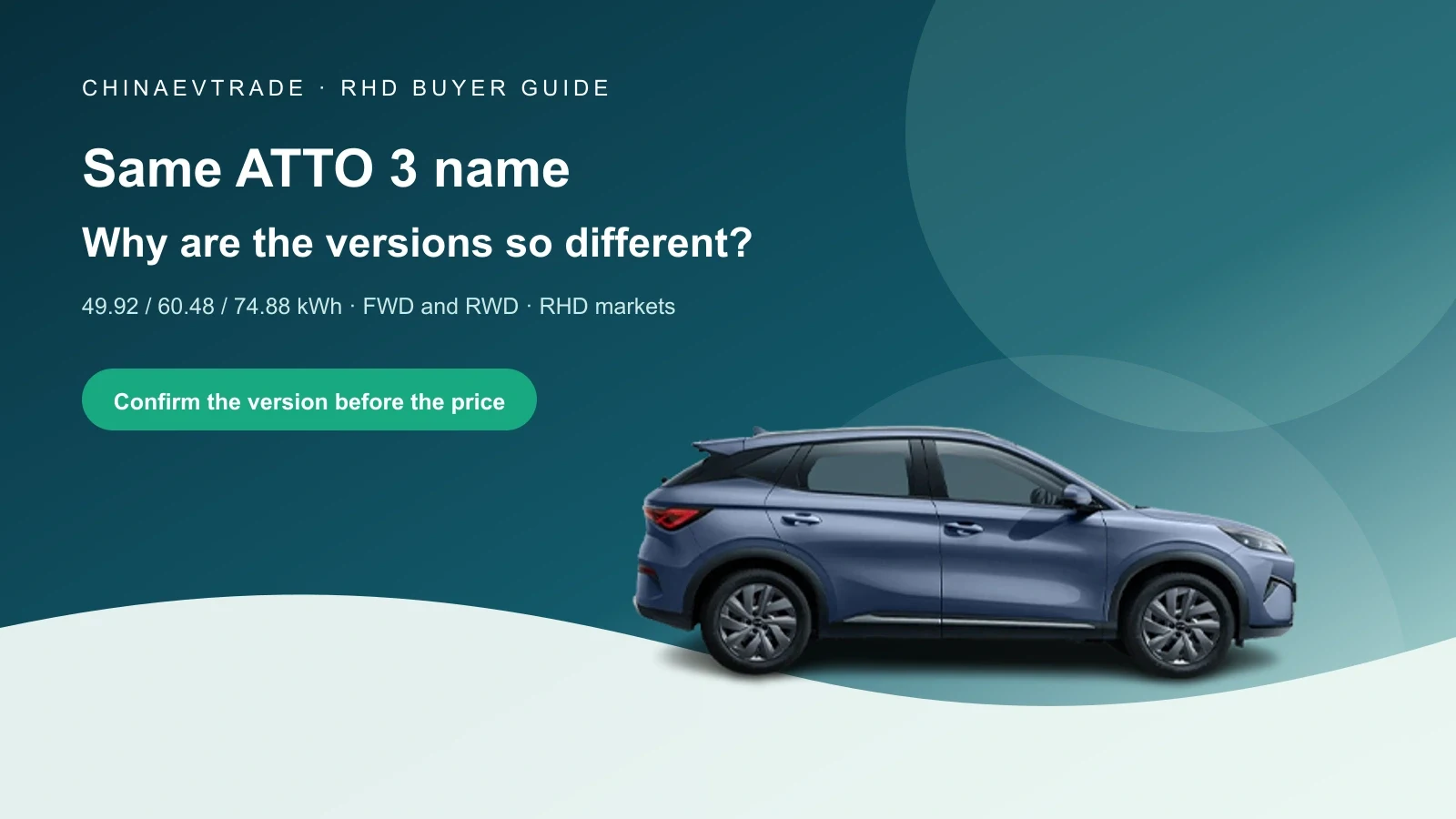
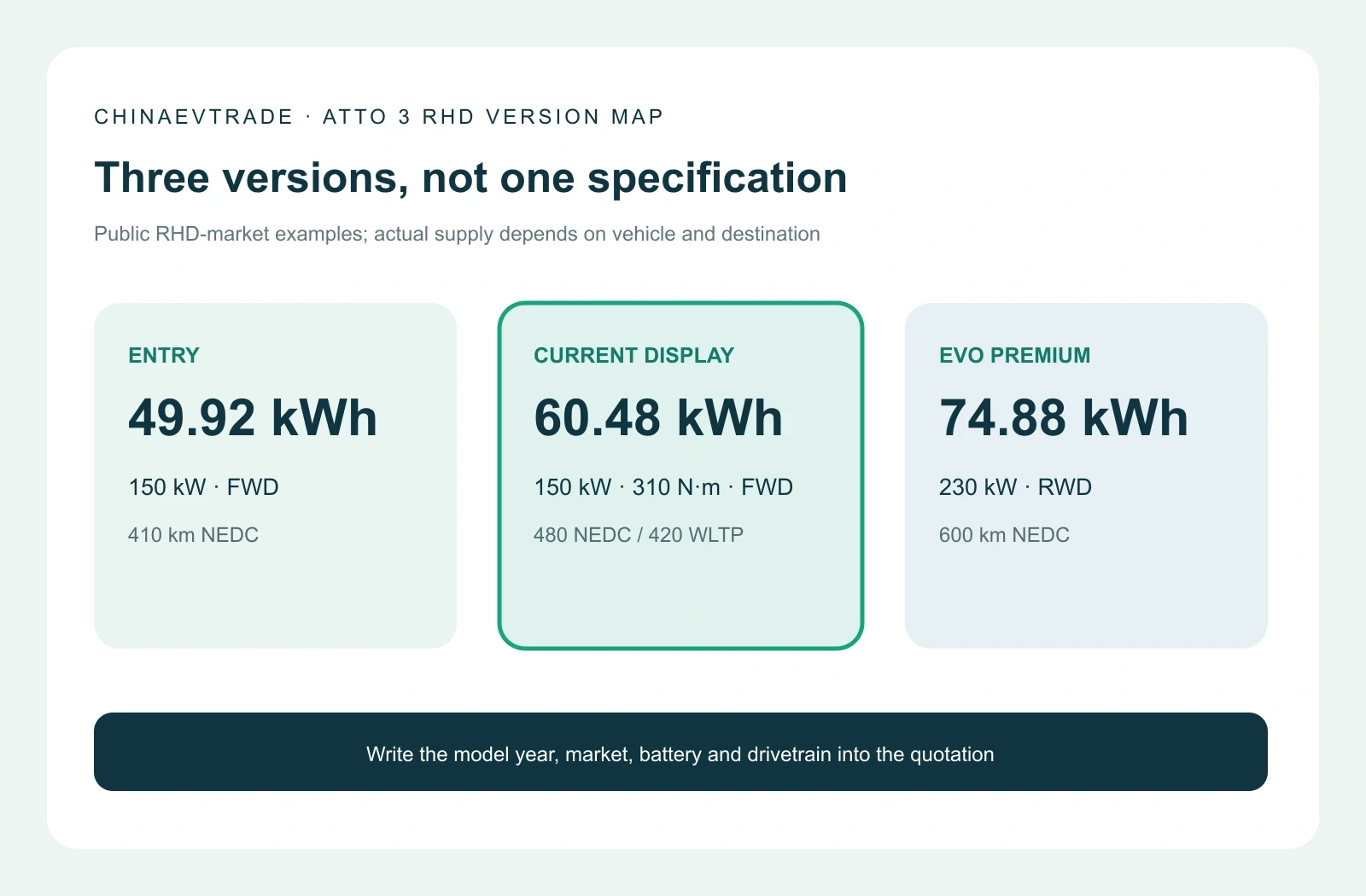
After the ATTO 3 EVO arrived in Australia, the RHD ATTO 3 could no longer be described by one battery size and one power figure. The range now includes a 49.92 kWh entry version, a 60.48 kWh FWD long-range version and a 74.88 kWh Premium model with rear-wheel drive.
This matters to import buyers. A request for “one RHD ATTO 3” can return quotations for different model years, destination markets and generations. The badge may be the same while the battery, drivetrain, charging system, connected services and documents are not.
Why the name stayed while the vehicle changed
Manufacturers often keep a recognised model name while adjusting equipment for each market, model year and price point. One RHD country may need a lower-cost entry model, while another prioritises range, charging or performance.
Different figures found online are not always errors. They may belong to different markets and years. The quotation must state the production year, destination-market specification, battery and exact grade.
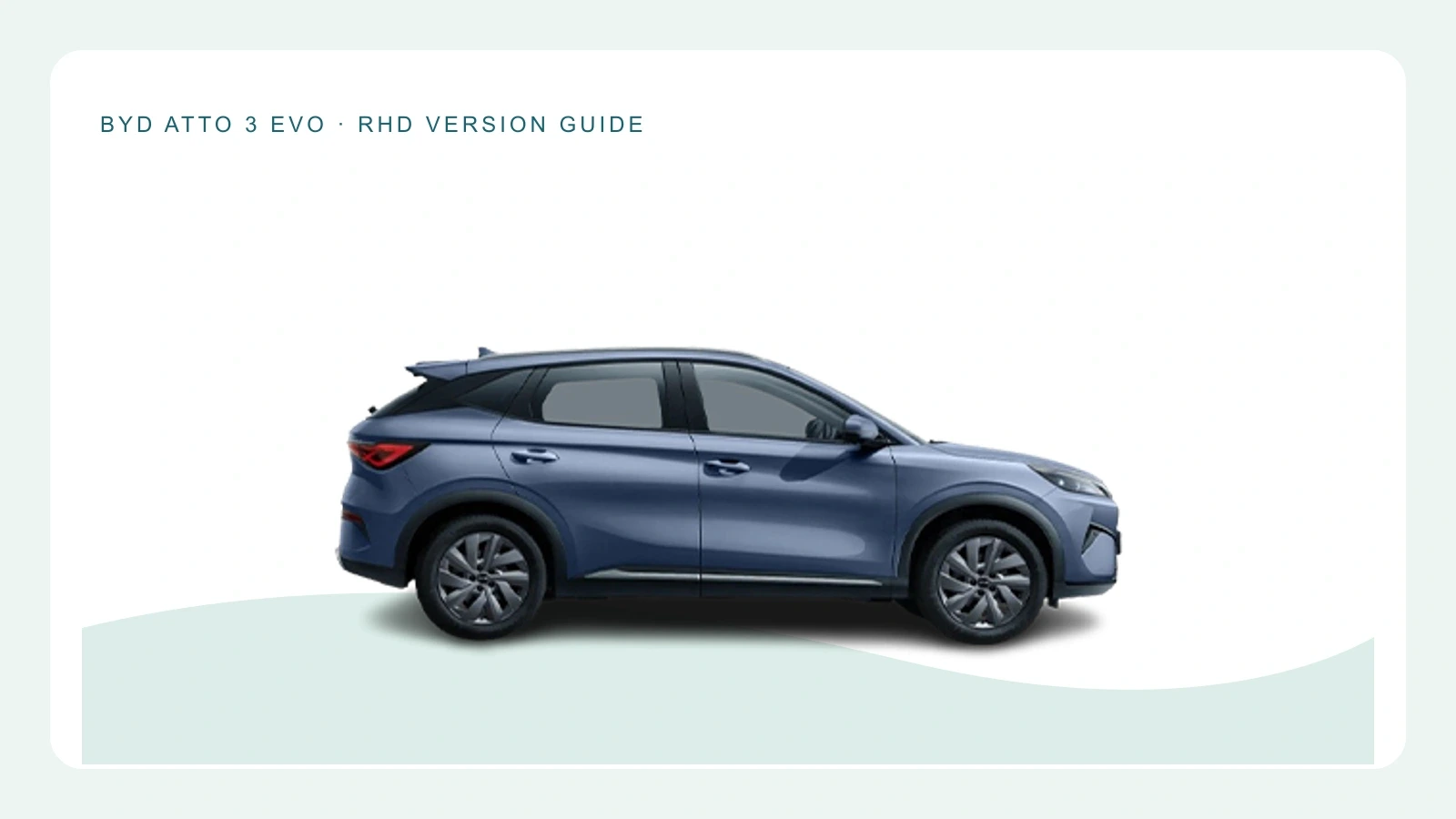
Three ATTO 3 specifications buyers often mix together
Australia’s 49.92 kWh Essential uses a 150 kW front motor and is rated at 410 km NEDC. It lowers the entry price, but availability must still be confirmed for the destination market.
ChinaEVTrade currently displays the 60.48 kWh RHD Superior specification: 150 kW, 310 N·m, FWD, with official figures of 480 km NEDC / 420 km WLTP. A 49.92 kWh request is checked separately and is not assumed to be interchangeable.
The 74.88 kWh ATTO 3 EVO Premium in Australia moves to 230 kW RWD and 600 km NEDC. BYD Europe lists 510 km WLTP, an 800 V architecture and up to 220 kW DC charging for its RWD Design version. Europe also lists AWD, but those specifications cannot be applied automatically to every RHD market.
China’s new Yuan Plus is not automatically the same RHD ATTO 3
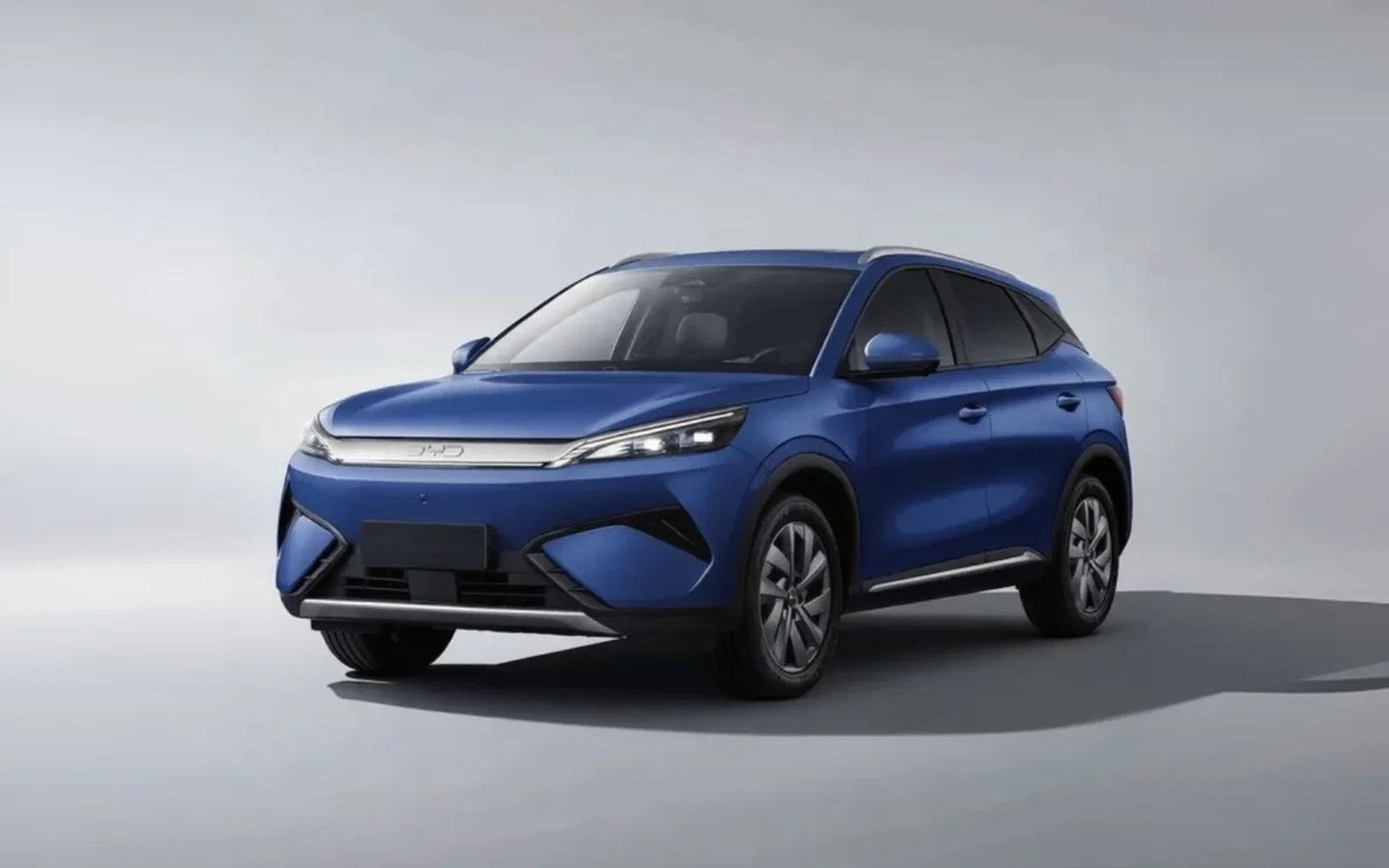
China’s latest Yuan Plus has different dimensions, wheelbase and battery options. Public information lists a 4,665 mm length, 2,770 mm wheelbase and 57.5 or 68.5 kWh batteries.
It is first a China-market vehicle. Its relationship with the ATTO 3 name does not prove that an identical RHD version or the same overseas homologation is available. Buyers should rely on the actual vehicle, market designation and documents.
Range figures need their test standard
CLTC, NEDC and WLTP are different test cycles. A figure should never be copied without its standard or converted with a fixed percentage. Speed, temperature, air conditioning, load and road conditions also affect real use.
Charging is similarly market-dependent. A high vehicle-side DC rating does not mean the destination network can sustain it. Confirm the connector, AC charging, portable charger and local electrical conditions before shipment.
What this means for overseas buyers
Version diversity is useful because it creates clearer choices for budget, range and performance. The risk comes when an entry-level price is explained with premium specifications, or EVO technology is used to describe a 60.48 kWh earlier-platform vehicle.
For a bulk order, also confirm infotainment language, maps and connectivity, homologation documents, spare parts and after-sales arrangements.
Six facts to put in the enquiry and order
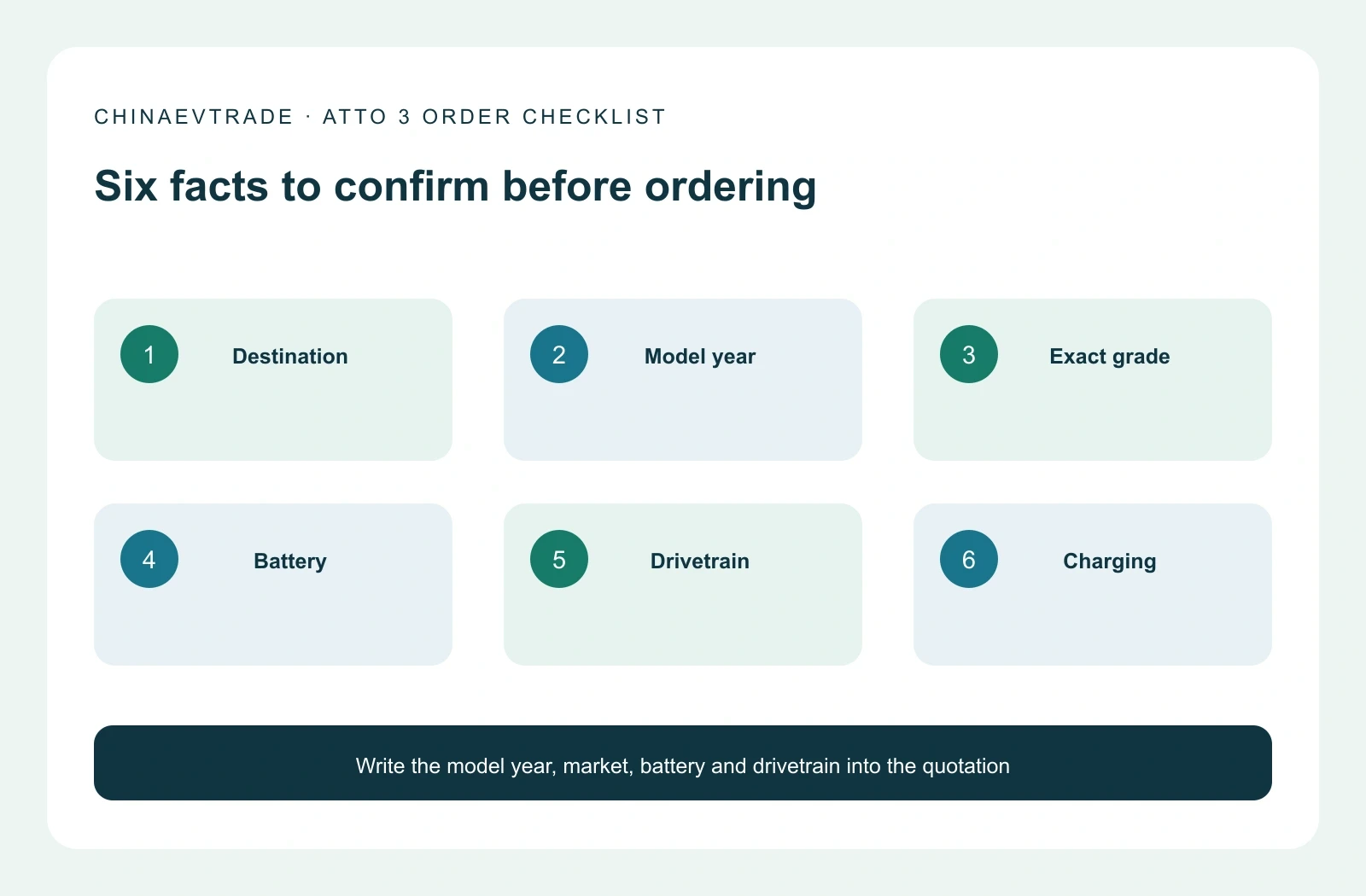
State the destination country, production year, exact grade, battery capacity, drivetrain and charging connector. These details should appear in the order confirmation, not remain in a chat message.
ChinaEVTrade currently presents the 60.48 kWh FWD RHD ATTO 3. Requests for the 49.92 kWh entry version or 74.88 kWh ATTO 3 EVO are checked against the destination market and current supply rather than treated as the same vehicle.
Sources
BYD Australia: ATTO 3 EVO grades and specifications
BYD Europe media: ATTO 3 EVO battery, drivetrain and charging
CarNewsChina: public specifications for the new China-market Yuan Plus / ATTO 3
This article reflects information available at its original publication date. Vehicle specifications and destination requirements should be confirmed for the exact vehicle and shipment.