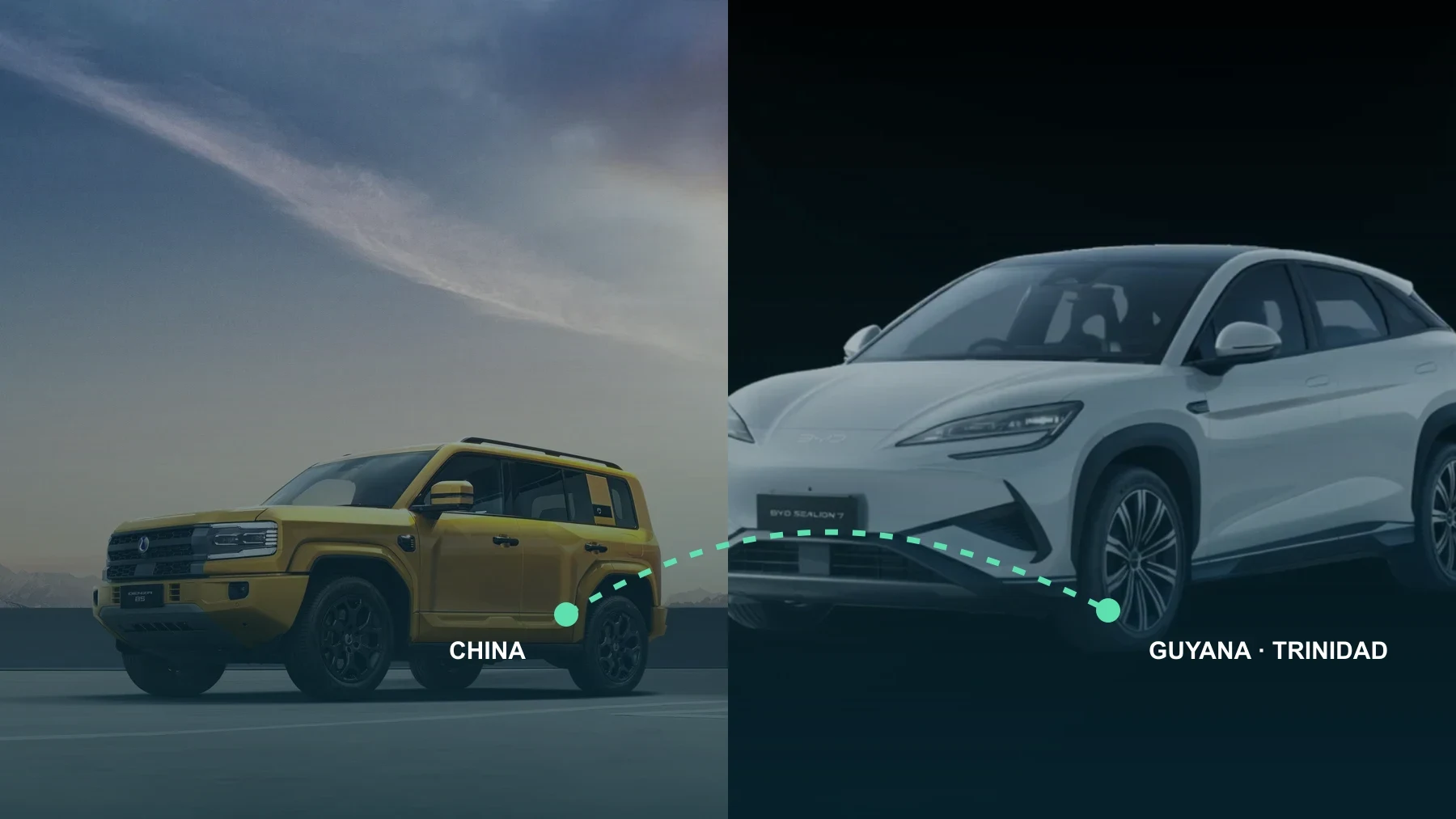
Buyers in Guyana and Trinidad and Tobago are showing growing interest in the DENZA B5, B8 and D9, as well as the BYD SEALION 7 and M6. In many enquiries, the vehicle has already been chosen; the order pauses only when the shipping quote arrives.
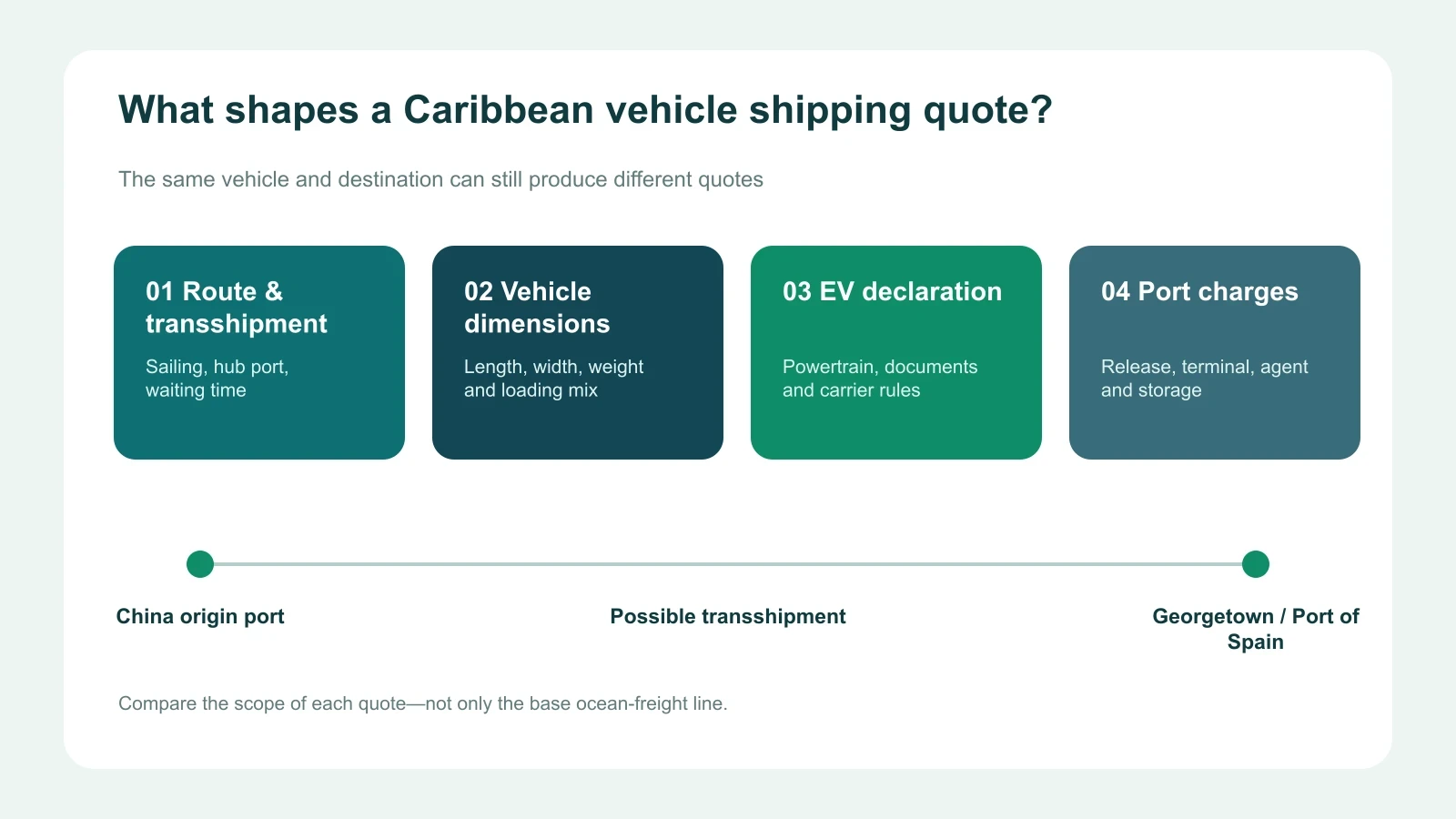
The price is rarely caused by one surcharge. Sailing frequency, transshipment, vehicle size, EV or PHEV declaration rules, container loading and destination charges all affect the final landed cost. Comparing only one ocean-freight line can therefore be misleading.
Why can quotes for the same vehicle vary so much?
Vehicle routes from China to Guyana and Trinidad do not always have the same frequency or space as larger import markets. A booking may require a regional transshipment, while individual carriers and sailings may apply different acceptance conditions for new-energy vehicles. A carrier calling at Port of Spain does not mean every sailing accepts every powertrain.
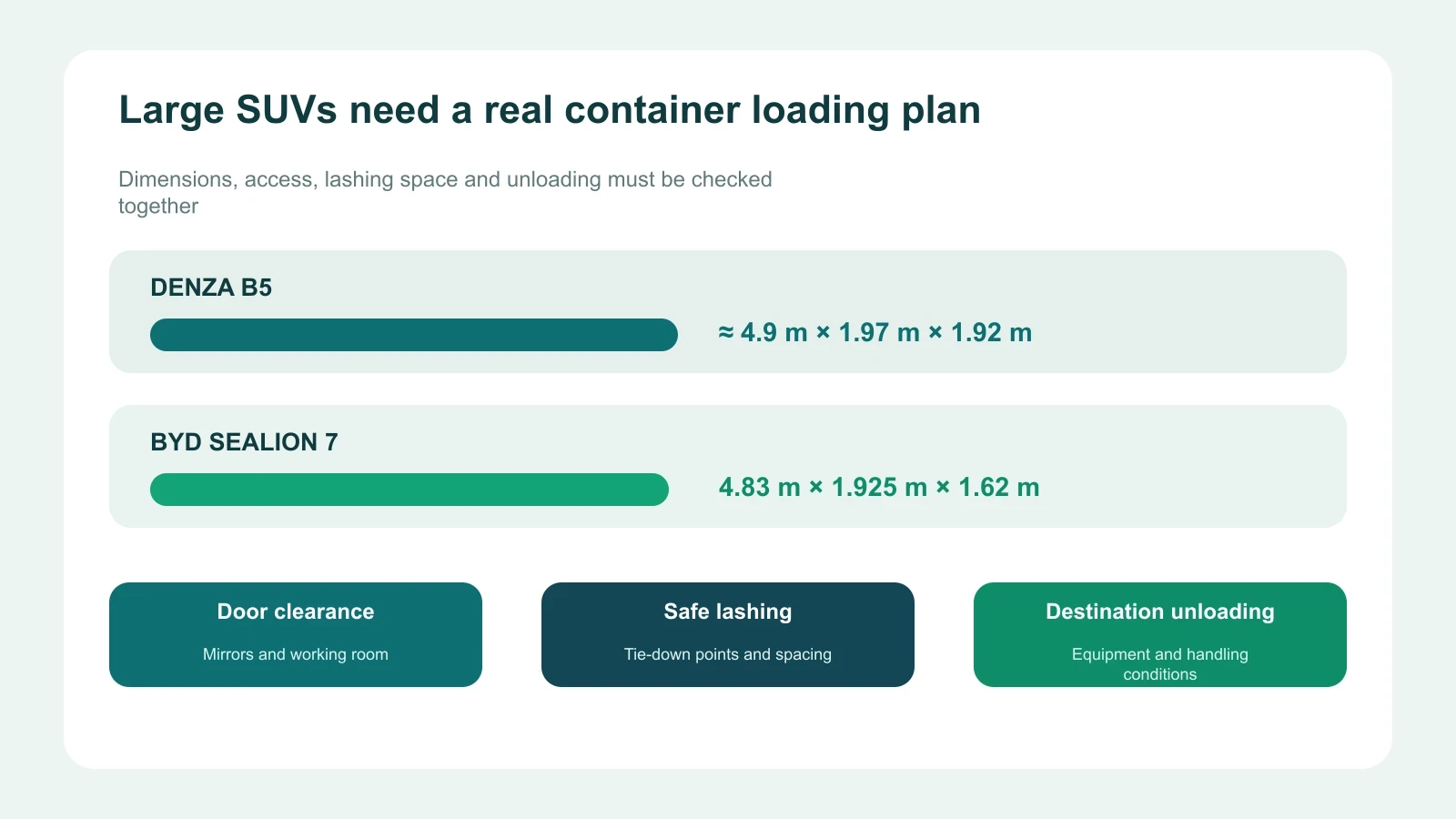
B5 and SEALION 7 size changes the container plan
The DENZA B5 is nearly 4.9 metres long and 1.97 metres wide; the SEALION 7 is 4.83 metres long and 1.925 metres wide. The D9 is a large MPV and the B8 is also substantial. A 40-foot container plan must consider door clearance, mirrors, ground clearance, lashing points, working space and safe unloading—not just whether two vehicle outlines fit on paper.
Two vehicles for the same destination can often share fixed export and loading costs, but the combination must be assessed model by model. A B5 paired with a SEALION 7, M6 or D9 can produce a very different loading result. Forcing a combination to save freight is not worthwhile if it increases damage or handling risk.
Shipping an EV or PHEV requires more than loading the vehicle
Battery-electric, plug-in hybrid and fuel vehicles are not declared identically. Carrier requirements can include accurate powertrain identification, battery information, inspection records, declarations and advance approval. A very low quote that excludes these requirements may not be executable.
- Exact model and trim
- BEV, PHEV or fuel
- Left- or right-hand drive
- Vehicle quantity
- Destination country and port
- Individual, dealer or company buyer
- Local customs agent appointed or not
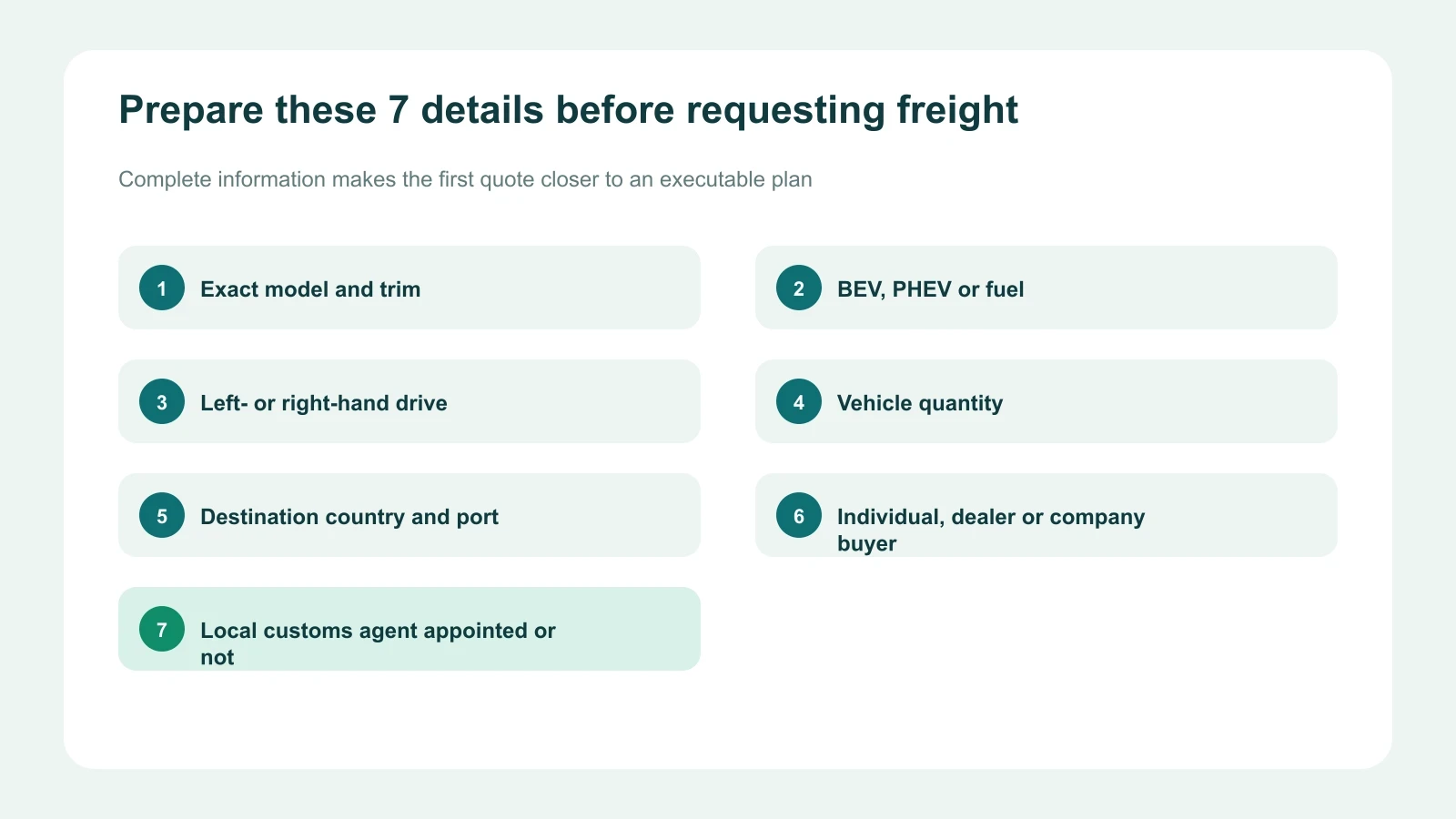
Before asking for freight, provide the exact model and trim, powertrain, left- or right-hand drive, quantity, destination country and port, buyer type, and whether a local customs agent has been appointed. A complete request produces a quote much closer to the final plan.
Why the cheapest quote can cost more at destination
Some offers show only base ocean freight; others include inland transport, export declaration, container loading, lashing and documents. Destination handling, agent, storage and release charges may still be separate. Quotes should be compared on the same scope, including route, transshipment, validity and free-time terms.
- Port-to-port or China-side charges included
- Loading, lashing and vehicle protection
- EV/PHEV declaration and documents
- Direct or transshipment route
- Destination handling and agent charges
- Quote validity, sailing date and free time
- Terms if the planned sailing is missed
Practical ways to reduce shipping cost
The most useful savings usually come from comparing total landed logistics cost, combining compatible vehicles for the same port, keeping both container and RoRo options open, confirming documents before dispatch and allowing a reasonable sailing window.
RoRo is not automatically cheaper, and a container is not automatically better. The best option is the one that currently has acceptable space, handles the vehicle powertrain correctly and can be completed at the destination port without avoidable extra charges.
What ChinaEVTrade can check before you book
ChinaEVTrade can check the vehicle version, dimensions and powertrain, compare current route options, and coordinate China-side transport, export documents, loading and lashing requirements. Import permits, tax, customs clearance and registration should be confirmed by the buyer with the relevant authority or a licensed local agent.
Sailing schedules and freight levels change. Rather than promising a fixed long-term price, a useful quotation should identify what is included, what remains payable at destination, and which vehicle and sailing assumptions were used.
Public sources
Port Authority of Trinidad and Tobago: shipping lines and agents serving Port of Spain
Guyana Revenue Authority: motor vehicle import and tax guidance
CMA CGM: vehicle booking and declaration requirements
This article reflects information available at its original publication date. Vehicle specifications and destination requirements should be confirmed for the exact vehicle and shipment.