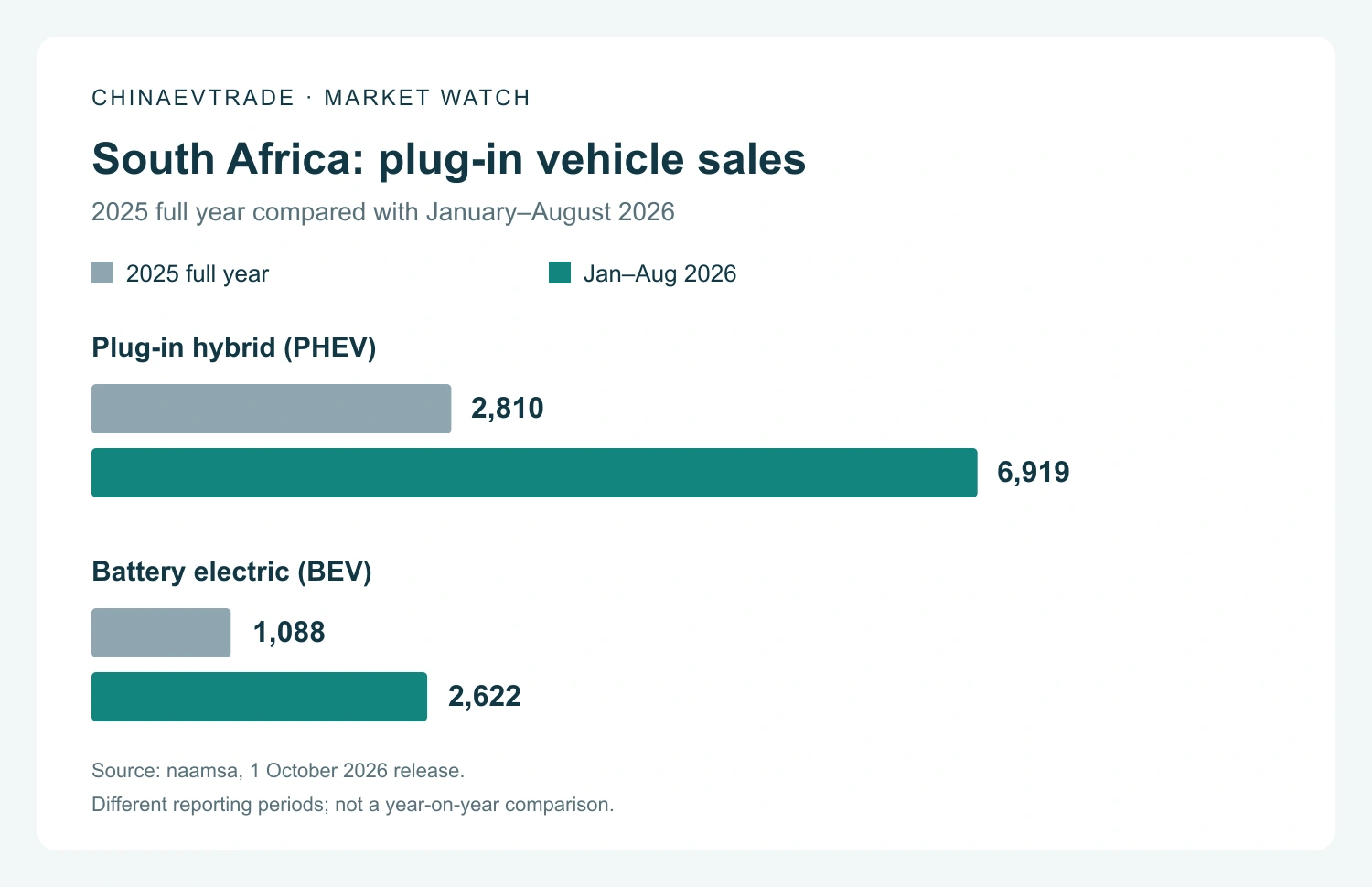
In its market report released on October 1, South Africa’s Automotive Business Council, naamsa, reported 6,919 plug-in hybrid electric vehicle (PHEV) sales and 2,622 battery-electric vehicle (BEV) sales in the first eight months of 2026. The respective full-year 2025 totals were 2,810 and 1,088. Eight months of sales have therefore reached about 2.46 and 2.41 times the previous full-year figures.
The change over just eight months points to a market gathering pace. PHEV sales are notably higher than BEV sales. For Chinese manufacturers offering both powertrains, South Africa presents more opportunities.
BYD and Chery’s local sales attract attention
On October 20, South African publication MyBroadband, citing sales reported to naamsa, said BYD sold 468 PHEVs and 189 BEVs locally in September. Chery’s Q electric model sold 214 units in its launch month. The report also put Chery Group’s PHEV sales, including relevant sub-brands, at 672 units.
These figures show actual demand for Chinese brands’ new-energy vehicles in South Africa. Although electric vehicles remain a developing part of the overall new-car market, BYD, Chery and other brands are competing for buyers with products at different prices and with different powertrains.
More right-hand-drive choices, from family SUVs to pickups
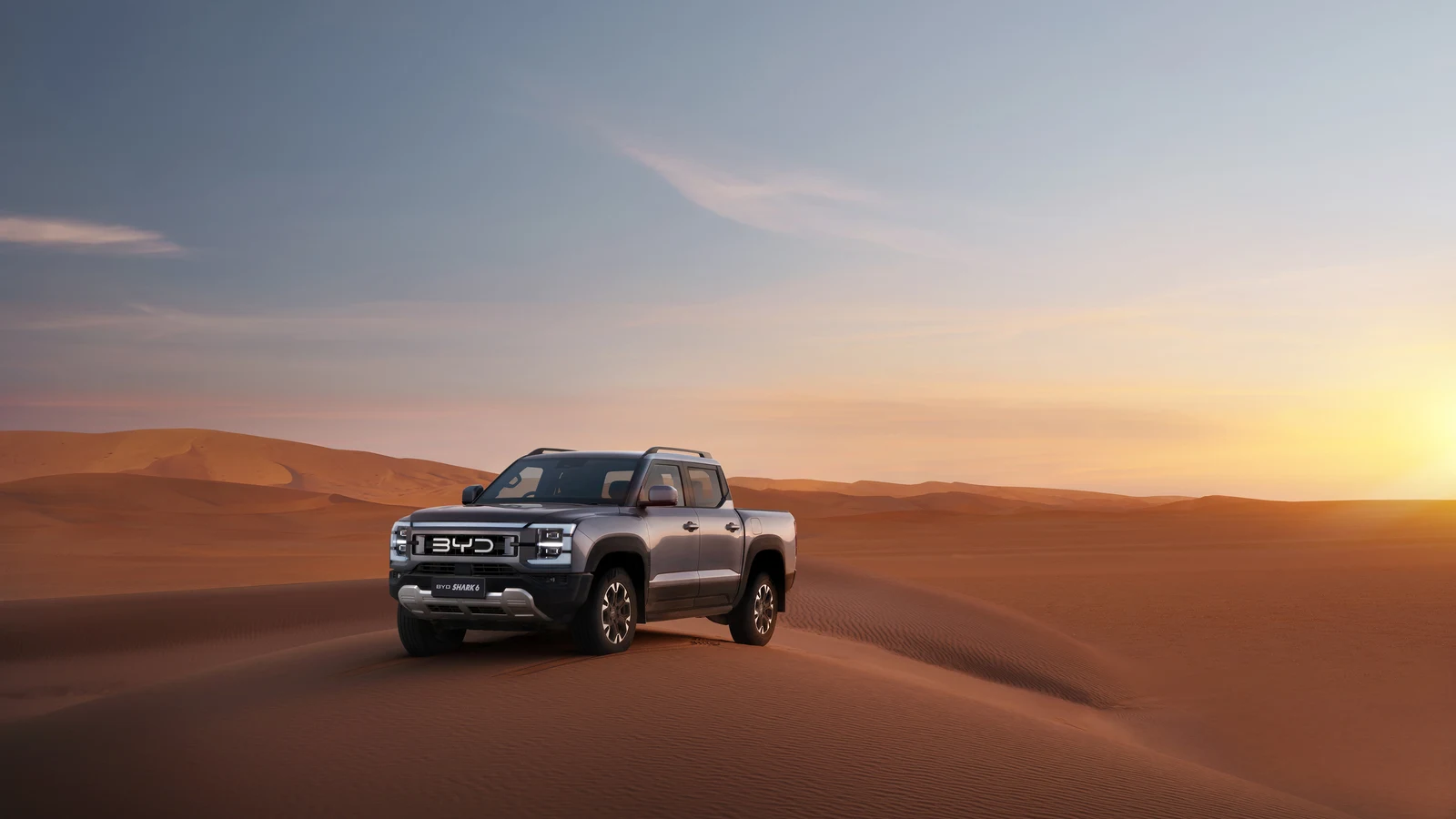
The model range is changing, too. BYD’s South African website currently lists the SEALION 6 DM-i plug-in hybrid SUV, the SHARK 6 plug-in hybrid pickup, and battery-electric models including the SEALION 7 and ATTO 3. Chinese brands’ local offering is no longer limited to a single small electric car.
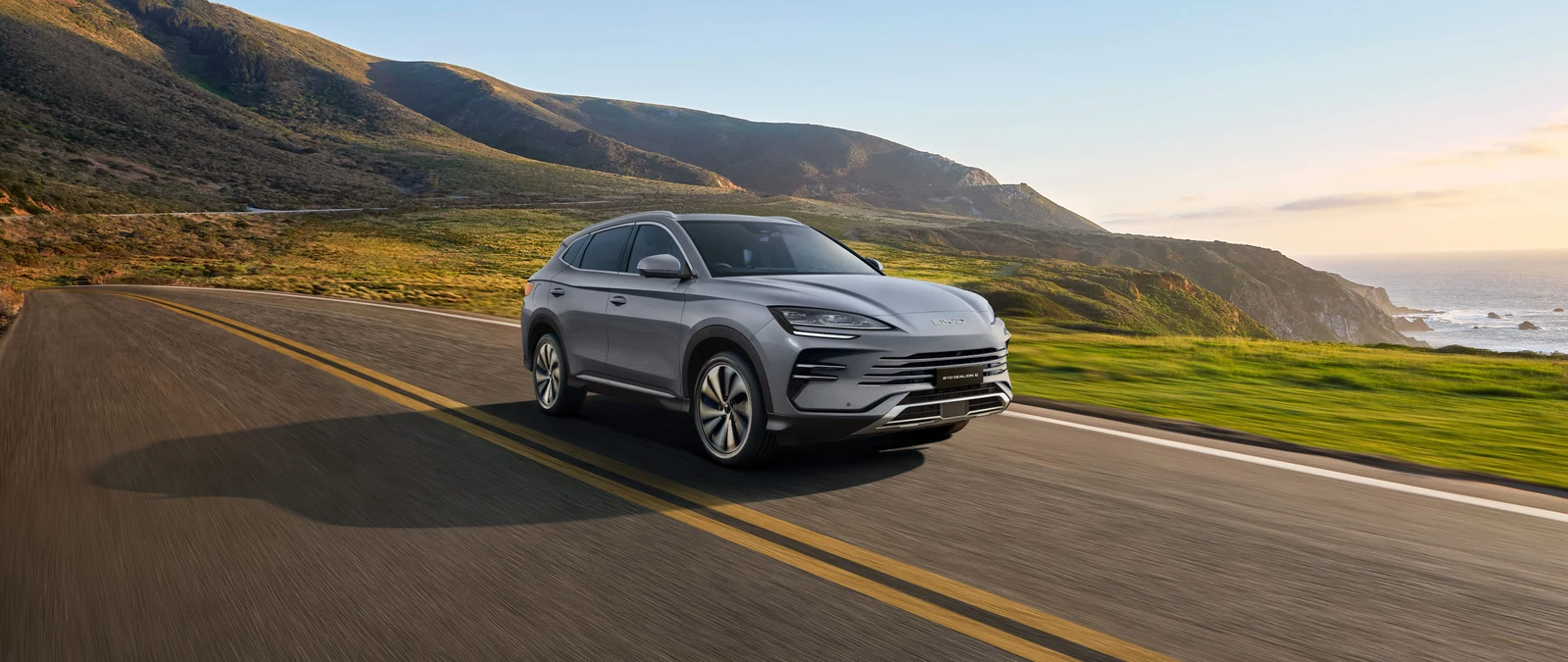
A daily commute with occasional long trips, or work that combines regular routes with unexpected tasks, creates room for PHEVs. They can charge externally while retaining fuel refuelling, offering an option for buyers who want both ways of using a vehicle.
How much a PHEV saves still depends on charging frequency, journeys, load and driving habits. BEVs are also worth comparing for users with dependable charging and relatively predictable daily routes. The choice ultimately comes down to each buyer’s own operating costs.
What to check beyond the vehicle price
Alongside price, importers and dealers need to check the right-hand-drive version, equipment, charging connector, parts and after-sales arrangements. The same model name can cover different specifications in different markets. Confirming the exact version before purchase can matter more than simply reading an equipment list.
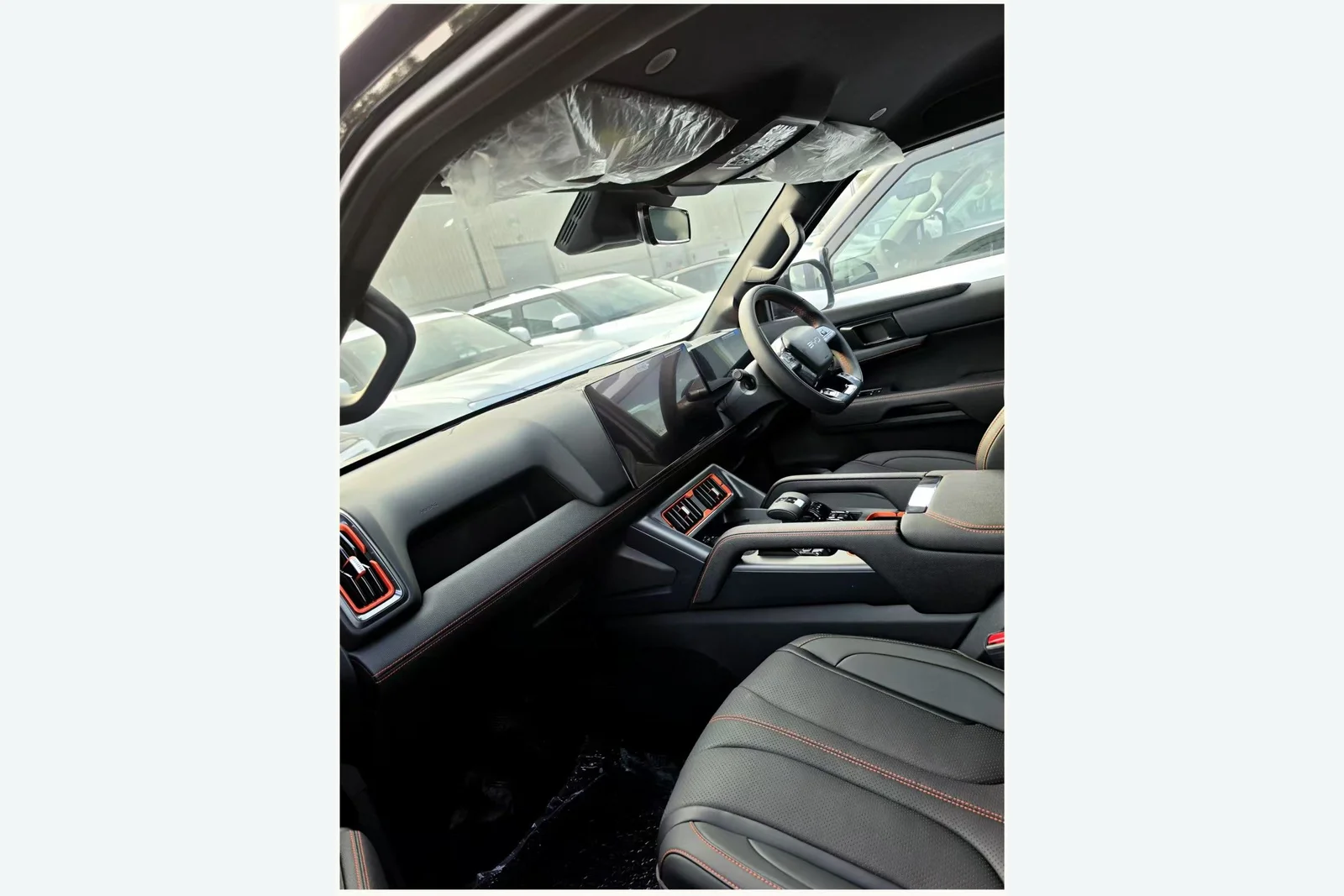
South Africa’s experience cannot simply be applied to the whole continent. Vehicle entry requirements, taxes, infrastructure and purchasing power differ between RHD markets, as can versions sold under the same model name. South African sales indicate changing local demand, not that every Chinese RHD model can automatically be imported, registered or sold.
Urban commuting, family travel and business use need separate consideration when sourcing vehicles. With more models available, suppliers need to understand where and how customers intend to drive before recommending a suitable version.
ChinaEVTrade focuses on practical, competitively priced RHD EVs
ChinaEVTrade helps overseas buyers match Chinese new-energy vehicle models to their needs and coordinates sourcing and export arrangements. The focus is on practical, competitively priced BEVs and PHEVs, including available right-hand-drive versions.
Buyers assessing Chinese RHD SUVs, pickups or other new-energy vehicles can discuss their destination market, budget and intended use with ChinaEVTrade, then check available versions, equipment and export arrangements.
This is an original industry commentary by ChinaEVTrade. The analysis and views represent ChinaEVTrade only. Sales figures come from the public sources below. The cover and SEALION 6 image are from BYD’s South African website; the cabin photograph is ChinaEVTrade’s own.
naamsa: September 2026 report, including NEV sales through August
MyBroadband: South African EV brand sales report, October 20, 2026
BYD South Africa: local model range
This article reflects information available at its original publication date. Vehicle specifications and destination requirements should be confirmed for the exact vehicle and shipment.